
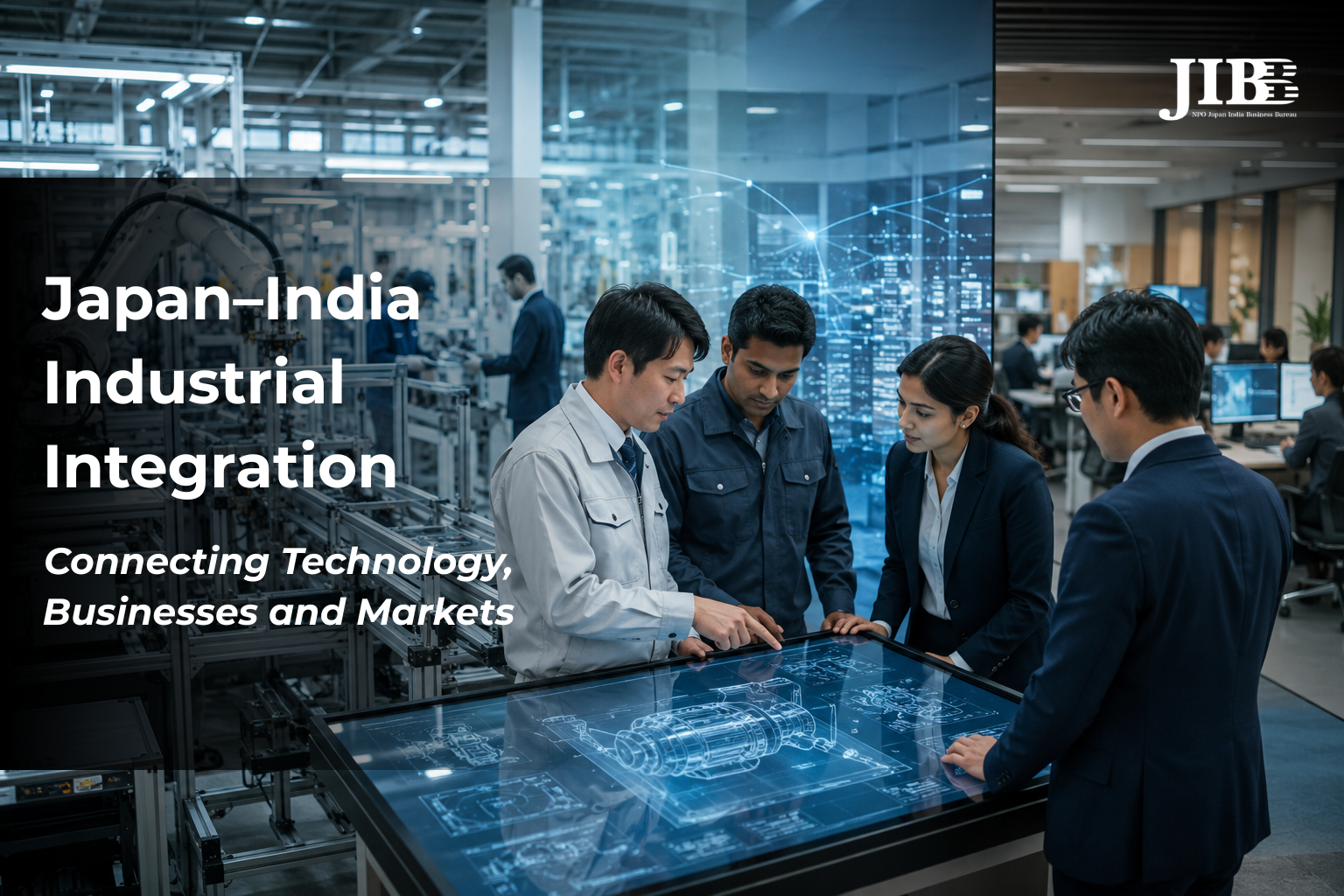
As we enter a more globally connected economy, technological advancement is no longer the sole catalyst for industrial expansion; it is also dependent on building solid global alliances. With a growing emphasis on secure and resilient supply chains, sustainable manufacturing, and an innovation-driven economy, the partnership of industry, government, academia, and research has reached a tipping point.
This is especially the case with our two most dynamic partners, India and Japan, who share similar yet contrasting complementary assets that translate into emerging opportunities within sectors ranging from manufacturing, semiconductor, digital technologies, clean energy, mobility, healthcare, to advanced engineering. By facilitating this coming together, industry integration helps in forging connections among all stakeholders to form an integrated ecosystem that facilitates easy cross-border movement of knowledge, technology, human capital, funding, and research.
Connecting Innovation, Businesses, and Markets Across India and Japan
Japan-India relations have progressively become a Special Strategic and Global Partnership that involves joint economic collaboration, tech advancement, and economic well-being. Bilateral projects in fields of Manufacturing, Infrastructural Development, Digital Transformation, Economic Security, and New-age Technology continue to cement ties by encouraging an ecosystem favourable to organizations searching for cross-border business.
Amidst this, the Japan India Business Bureau (JIBB) plays the role of a central bridge between academic research and industry collaboration, public sector enterprises, and innovation ecosystems in both nations. This bridges the gap between Japanese and Indian businesses for technological partnerships, biz matchmaking, capacity development programs, joint research, and integration of value chain; to build reliable relationships across multiple projects.
As we see industry shifts worldwide due to market forces and changing supply chains, we can clearly see the importance of robust industry integration. JIBB connects diverse areas such as technology and business to India and Japan, and aids in strengthening bilateral industrial collaboration for better global opportunities and overcoming future challenges.
Why Japan-India Industry Integration Matters
Japan's industrial base has, for a long time, held global leadership in fields like advanced manufacturing, high precision machinery, Robotics and automation, material science and a broad array of high-quality manufacturing processes. This is set against the backdrop of India's burgeoning manufacturing industry, abundant young and skilled workforce, rapidly growing digital economy and start-up ecosystem. The synergies created by such complementary capabilities mean a greater level of economic partnership between these countries, which goes far beyond basic consumer-to-consumer, supplier-to-customer relationships and will eventually result in a higher value.
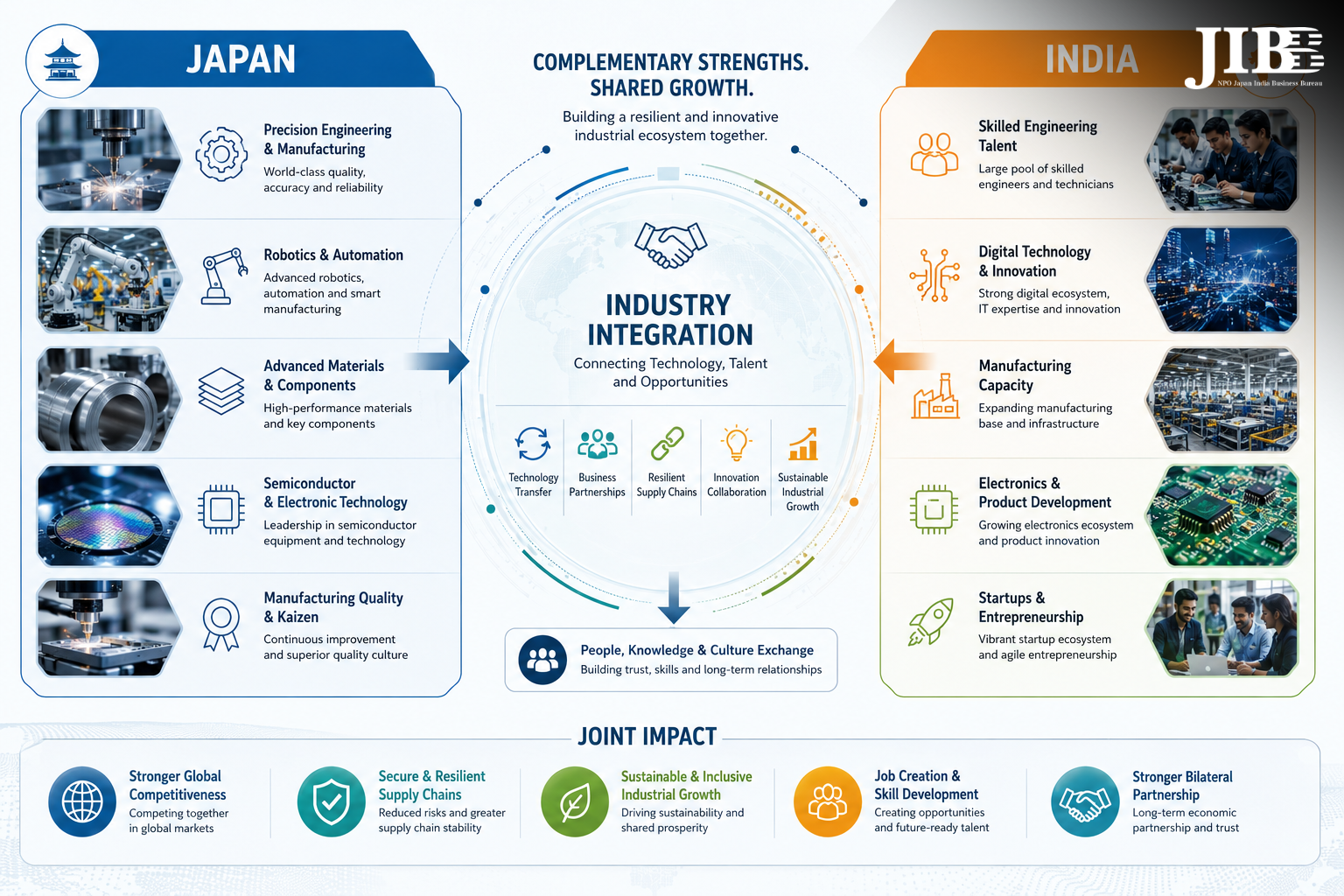
How Japan and India can leverage their Industrial Strengths
These arrangements are being put in place to develop new technologies, enhance capabilities, strengthen supply chains, improve resilience and speed up the rate of innovation and creation. Businesses across all sectors are diversifying manufacturing sites and sourcing networks to be better able to weather geopolitical challenges and protect against volatility by building resilient supply chains. Driven by a policy encouraging smart, high-tech industries and advanced manufacturing facilities, India is rapidly moving towards becoming a key player in this shift, whilst Japan actively encourages international industrial co-operation and looks toward its goal of building sustainable and secure economies worldwide. The role of integrating industries in this new era is perhaps best exemplified by the Semiconductor sector. Learn more about our bilateral semiconductor ecosystem in our India-Japan Semiconductor Partnership Guide and India's Semiconductor Renaissance.
The manufacture of a microchip requires a fully developed supply chain which comprises of not just chip fabrication plants, but also of manufacturers of specialist machinery, component makers, packaging and testing companies, logistics and materials companies as well as researchers, engineers and technicians.
Building Resilient Japan-India Supply Chains
Given the highly complex and involved nature of the supply chain, no single company or even a nation can dominate the production process of the chips, the demand for which will continue to skyrocket as devices, servers and vehicles are all continually updated and improved. With this understanding in mind, it can be seen how a co-operation between such as those that can be facilitated by the Japan India Business Bureau (JIBB) can lead to more growth in this and many other fields. This goes far beyond the scope of buyer-supplier relationships; Japan and India's unique combination of capabilities can be leveraged by building and fostering integrated ecosystems for innovation in the automotive, green energy, electronics, digital and healthcare technologies, advanced manufacturing industries.
Innovation in the modern world does not emerge through independent efforts alone, instead, it thrives as a result of the sharing of knowledge, expertise, technology and talent across organizations that possess complementary competencies. As organizations come into more contact with one another they will be able to identify opportunities to improve efficiency and tap into the opportunities that emerge through globalization, allowing businesses to enhance competitiveness by being able to respond efficiently to market shifts and adopt new technologies. Explore key sector developments in Key Sectors.
From Business Connections to Long-Term Industrial Partnerships
However, the successful integration of industries does require something more than just connecting companies. Such activities necessitate the cultivation of trusted relationships, understanding the precise needs of respective industries, orchestrating dialogue between stakeholders, and structuring frameworks for sustained and long-term partnerships.
The Japan India Business Bureau's role involves building upon this dynamic bilateral business ecosystem to stimulate growth in innovation and establish a sustainable industrial future for Japan and India by bringing together the private sector, research communities, academia and governments.
How JIBB Supports Japan-India Industry Collaboration
Successful industrial integration is never organic. For such integration to occur, you need a platform, founded on trust, that understand the needs of business, government, research, academia and more importantly, the creation of opportunities for relevant industry collaborations. As the industries grow increasingly complex and interconnected, organizations require partners capable of facilitating discussions, finding synergies, and driving a collective aspiration into real-world applications.
This very aspiration led to the formation of The Japan India Business Bureau (JIBB), which has emerged as a significant facilitator bridging two key industrial economies, Japan and India. JIBB serves as an ideal interface connecting a spectrum of industry participants-businesses, entrepreneurs, and institutions-towards fostering a climate for lasting collaboration, knowledge dissemination and the advancement of mutually beneficial trade and investments. It does more than simply organizing seminars and events; it orchestrates structural partnerships geared towards sustained industry growth and bilateral economic progress.
A core capability of JIBB is its adeptness in identifying the most relevant business connections for its stakeholders. Through organized business delegation visits, industry interaction programs, targeted business-to-business matchmaking, and sector-specific initiatives, JIBB has proven invaluable in linking organizations seeking to explore new markets, potential collaborators and partnerships based on clearly defined strategic interests. These engagements frequently pave the way for joint ventures, investment discussions, technological co-operations and commercial arrangements.
Technology collaboration is another significant aspect that JIBB supports. With industry-wide digitalization transforming production, the application of AI, automation, and advancement of semiconductor technology playing an ever-crucial role in defining future industrial capacities, the need for accessing cutting-edge technological solutions is paramount. JIBB acts as a catalyst in forging alliances among technology vendors, manufacturers, R&D centers and innovation ecosystems that are essential to sharing, adopting, and actualizing cutting-edge technologies into viable industrial solutions.
Emphasizing that the success of industrial endeavours is not merely technology-driven but also people-centric, JIBB is active in promoting knowledge transfer and skills development. By encouraging the cross-exchange of information between industry veterans, educational bodies, and professionals of both nations, the bureau actively champions initiatives designed to enhance technical capabilities, cultivate leadership competencies, and improve cross-cultural acumen, thereby fostering a well-equipped and versatile work force suited for a globalized industry landscape.
The strengthening of value chains is an often-overlooked element that contributes to overall industry integration but is vital for success. Modern industries thrive on intricate value chains comprising suppliers, tech innovators, logistics partners, researchers and service providers. JIBB endeavours to promote collaborative synergy throughout these chains, assisting organizations in identifying potential areas to enhance resilience, improve operational efficiency, and create mutually beneficial industrial partnerships. For hands-on assistance, explore JIBB Advisory Services.
Innovation forms another indispensable element of JIBB's strategy. The bureau endeavours to bring industry, academic institutions, start-ups and research entities together through organized bilateral dialogues, knowledge exchange programs and innovation sharing forums geared towards stimulating innovation and the exchange of technical know-how and expertise. The ultimate goal is to spur the generation and commercialization of groundbreaking ideas that are of mutual strategic interest.
JIBB's commitment to holistic industry integration extends beyond individual collaborations; it is actively working towards creating a robust and cohesive Japan-India industrial ecosystem. Through interactions among businesses, policymakers, academia, and leaders in technology, the Bureau endeavours to build an environment where innovation, investment, and industrial cooperation can flourish. The Bureau's ecosystem-driven approach acknowledges the understanding that sustained economic growth emanates not from disjointed efforts but from sustained partnerships built upon shared principles of trust and expertise.
As the economic engagement between Japan and India continue to expand and evolve, JIBB remains dedicated to fostering meaningful industrial integration, forging connections that empower organizations individually and also strengthen the bilateral industrial ecosystem into a more resilient and globally competitive force.
Technology Transfer & Business Matching
Among various key drivers of industrial competitiveness, innovation has emerged as a crucial component. However, innovation only offers its highest value when knowledge, technologies and skills translate from research centres to real world applications, the process we refer to as technology transfer. Technology transfer is essential to help firms upgrade productivity, innovate solutions and maintain the pace with technological advancements. Japan and India represent a unique opportunity to leverage these complementary strengths, with Japan being renowned for advanced manufacturing and precision engineering, while India possesses a dynamic and growing innovation ecosystem and an ambitious policy to transform into a technology and electronics manufacturing hub. When both countries collaborate with their strengths in technology, a path to innovation-led growth opens.

For JIBB, technology transfer goes beyond simply a one-way transfer of knowledge, it's a collaborative journey where we bring together Japanese and Indian firms, academic institutions and technology leaders, research institutions and startups. Through organised interactions and dialogue, JIBB creates opportunities to explore shared interests, complement each other with their expertise, best practices and innovative solutions to enhance the industrial growth in both countries.
In parallel, one of the fundamental aspects of cross-border collaboration and partnerships is finding the right partners. The search for suitable partners and the establishment of business relationships based on a common strategic vision and objectives is often one of the most challenging parts of developing international presence. JIBB has addressed this challenge by facilitating business matching opportunities. These structured interactions include industry visits, conferences, networking events, bilateral business meetings, and sector-specific engagement opportunities, with an aim to foster conversations that have the potential to lead to technology transfer partnerships, joint ventures, investment opportunities, joint ventures, commercial agreements, and collaborative research agreements. Instead of simply facilitating brief one-time introductions, JIBB aims to nurture relationships that can flourish into sustained and productive alliances. Read our detailed analysis on turning policy frameworks into execution in From Policy to Production.
Similarly, business matching helps reinforce an entire industrial ecosystem. An industrial ecosystem includes all stakeholders across the value chain, including manufacturers, technology suppliers, service providers, financial institutions, research organizations, academic institutions, and start-ups. Each stakeholder in the ecosystem plays an important role and by bringing them together, JIBB facilitate an environment where knowledge sharing and resource optimization take place and where opportunities for collaboration arise, enabling to better serve industries such as advanced technologies, green technologies, as well as established industries such as automotive and electronics.
Whether supporting cutting-edge areas such as semiconductors, AI, robotics, and green technology, or driving growth in traditional sectors such as automobiles and electronics, these collaboration initiatives are crucial for the future of bilateral ties. At JIBB, technology transfer and business matching activities are fundamentally about creating resilient and sustainable industrial relationships between Japan and India that ultimately contribute to the shared prosperity of both nations.
Training & Skill Development for Japan-India Industry
Skill development is increasingly emerging as a pivotal dimension of the India-Japan industrial cooperation landscape beyond technological and capital investments, or infrastructure development. With industries being driven towards Digital Transformation, Automation, Advanced Manufacturing and emerging technologies, a skilled and globally aware workforce has become increasingly crucial. In this context, imparting technical know-how, along with cultural understanding, have become important facets of a successful India-Japan industrial collaboration. Read about precision manufacturing standards in Precision, Purity, and Partnership.
India and Japan, with their inherent strengths in workforce development, possess complementary abilities to offer a unique proposition.
Japan is renowned for its quality manufacturing capabilities, process optimization, precision engineering, and continuous improvement techniques such as Kaizen and Monozukuri. India has a vast pool of skilled engineering and IT professionals, as well as one of the largest young workforces globally, which are actively contributing to industrial and economic growth worldwide. Combining these two powerhouses of talent development will not only facilitate knowledge sharing but also create a talent pool which is better equipped for the future of industries. For JIBB, skill development is a strategic long-term investment for strengthening the bilateral industrial ecosystem.
The Bureau aims to achieve this by fostering interaction between leading companies, academic and research institutions, industry professionals, and relevant government agencies of India and Japan to facilitate the exchange of best practices, technical expertise, and experiential knowledge that can lead to better workplace preparedness.
Training programs can be conducted in various formats, such as technical workshops, executive exchange programs, guest lectures by experts, industry seminars, innovation summits, and knowledge-sharing platforms. These can expose industry professionals, researchers, students, and entrepreneurs to international manufacturing trends, technological advancements, and modern business practices, offering a chance to interact directly with their counterparts and learn about the specific industrial ecosystems. Another critical aspect of workforce development is building cross-cultural competency and business etiquette.
A strong international collaboration not only depends on technical competencies but also on efficient communication, mutual understanding, respect for diverse working cultures, and clear communication to achieve positive outcomes. JIBB helps in facilitating this by promoting dialogue among Japanese and Indian participants so they can better understand each other's working style, thereby forging closer bonds and partnerships. Industry-Academia collaboration in developing the future generation of workforce also plays an important role.
Effective partnership between academic institutions and the industries ensure that curriculum design and teaching methods are updated to reflect changing market needs and technological advancements.
The Bureau, by encouraging industry-academia dialogue and partnerships, fosters a productive ecosystem where research generated in universities can be leveraged for practical applications, reducing the industry-academia gap. In an era where semiconductors, artificial intelligence, robotics, clean energy, advanced manufacturing, etc are gaining prominence, workforce development will continue to be the key driver for future innovation and competitiveness of the Japan-India economic corridor. Investment in talent today would lead to a skilled, productive and competitive workforce, which in turn will fuel future collaborations and economic growth.
JIBB recognizes skill development as not an end, but as an essential element of industry integration, complementing technology collaboration to convert knowledge into lasting industrial success.
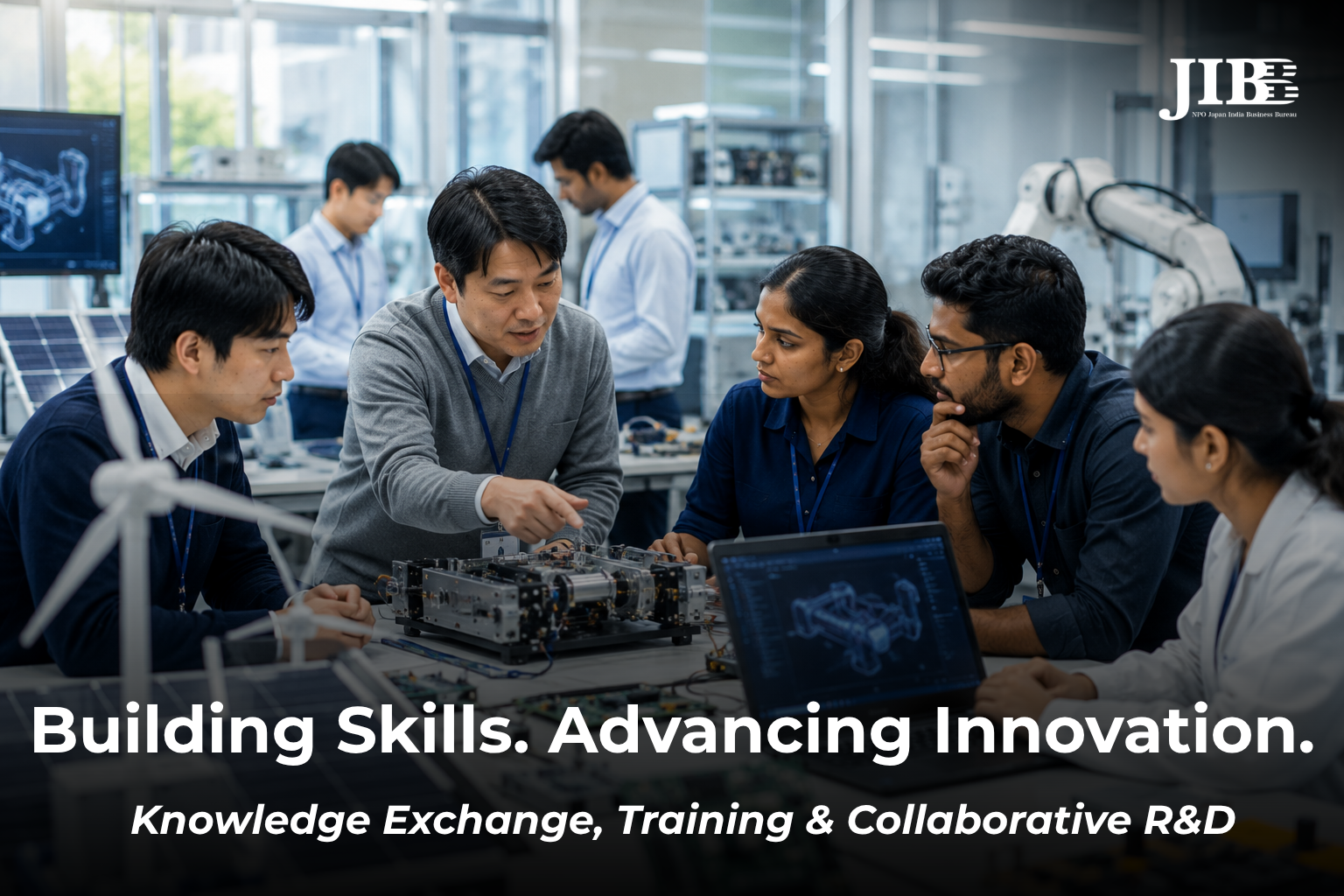
Japan-India Value Chain Integration
In the industrial age, businesses are no longer standalone entities. Any product, be it a semiconductor chip, a car, a medical implant or an industrial machine, is the result of the collaboration of several manufacturers, technology providers, logistics and transport providers, research centers, technology and software suppliers and service providers in different geographies. In the wake of increasing inter-dependence among countries' industrial systems globally, the reinforcement of these value chains has become crucial for the long-term viability and competitiveness of industries.
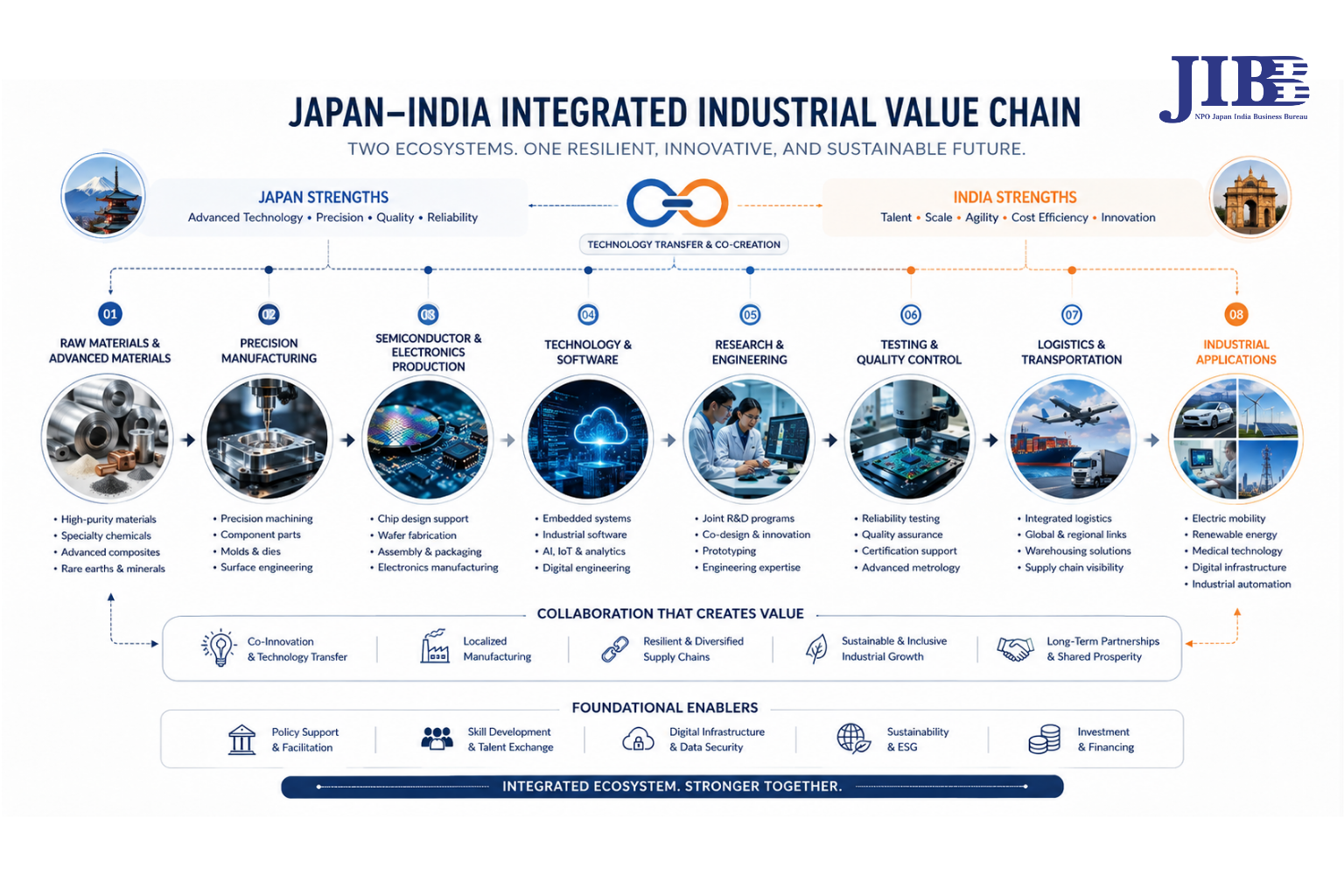
Value Chain Integration: For Japan and India value chain integration could become an excellent avenue to bring their respective strengths together and to facilitate and create a more diversified, resilient and sustainable industrial system. Japan's strengths in precision manufacturing, advanced materials, automation and industrial technology, along with India's vast manufacturing capabilities, engineering talent, digital strengths and rising role in the global supply chains, when integrated together could offer many advantages for corporations in improving efficiency, foster innovation, reduce vulnerabilities, and optimize production. Sectors like semiconductors, electronics, renewable energy, electric mobility, digital infrastructure and medical technology have strong interdependence and their future is hinged on closely integrated industrial value chains. These sectors rely heavily on component manufacturers, technology companies, machinery manufacturers, logistics firms, testing laboratories and research organisations working closely. Read more on manufacturing synergies in our India-Japan Manufacturing Partnership Article.
JIBB promotes and facilitates dialogue between the different players of the industrial system - corporates, industry associations, academic institutions, governments and service providers to bring them together and create business opportunities to explore potential value chain linkages and collaborations, including for localization, that support long-term industrial development and integration of companies into global value chains.
Japan-India Collaborative R&D
As technology changes so rapidly and exponentially the need for companies to collaborate and integrate innovation has become ever so crucial. In such times, collaboration at R&D level brings different expertise, perspectives and knowledge together for a better and more robust solution. Different organizations, universities, technology companies, startups, research centers and manufacturing firms bring their own unique expertise that could bring the collaboration to another level. The Japan-India partnership presents a huge opportunity to collaborate and combine expertise for the future. The partnership can foster collaboration between Universities, Research Centers, and firms, etc., and to help move from research to practical implementation of innovative technology and support the development of technologies that are essential for future sustainable economic growth.
As a hub for innovation, JIBB encourages dialogue and interaction among business, academic and government stakeholders to build an environment conducive to innovation and support research collaboration through conferences, experts' meetings, business dialogues, and collaborative forums to strengthen bilateral cooperation and support future tech development and collaborations.
Why partner with JIBB for Japan-India Business Collaboration?
Successful international partnerships cannot be achieved merely through an understanding of market dynamics, nor by simply spotting opportunities. They require the right connections with the right people at the right time, leveraging established networks of trust. Companies benefit from environments and platforms that promote authentic engagement and foster lasting, cross-border collaborations. The Japan India Business Bureau (JIBB) provides just such a platform, bridging companies, government agencies, industry associations, academic institutions, research organizations, and innovation ecosystems across Japan and India. JIBB works towards fostering a fertile ground for ideas to germinate into successful partnerships and for these partnerships to translate into sustained industrial growth. The approach of JIBB to industrial integration is one of collaboration rather than transaction. Through technology-centric engagements, business matching, knowledge exchange programs, industry interactions and ecosystem building activities, JIBB enables organisations to venture into new markets, enhance existing ties and discover opportunities for innovation and growth. In this way, stakeholders can work collectively towards addressing common challenges while enhancing the economic partnership between the two countries. Explore becoming a member via the JIBB Membership Portal.
As Japan and India expand their strategic partnership in areas of manufacturing, digital technologies, semiconductors, clean energy, health and advanced engineering, the role of trusted entities facilitating cross-border engagement will become increasingly important. By fostering dialogue, cultivating innovation and promoting industrial partnerships, JIBB helps to foster an increasingly interconnected and future-proof industrial ecosystem. Whether we support existing large enterprises, burgeoning start-ups, educational institutions, or established industry captains, our commitment to augmenting Japan-India collaboration through the creation of impactful partnerships remains unwavering.
Conclusion
Future industrial growth will not only depend on breakthroughs in technology but also on the robustness of the partnerships that bring these innovations to light.
As the world becomes more interconnected, cross-border collaborations between companies, governments, research institutions and academia will be critical to building resilient supply chains, speeding up innovation and fostering sustained economic value.
For Japan and India, industrial integration represents not merely economic cooperation, but also a path towards mutual innovation, the enhancement of industrial capabilities and a promising future of shared prosperity. By creating a common ground for dialogue, nurturing innovation and building a collaborative ecosystem based on trust and knowledge sharing, the Japan India Business Bureau continues to drive this vital partnership to its next phase.
Frequently Asked Questions
What is Japan-India industry integration?
Japan-India industry integration means bringing Japanese and Indian businesses, technology providers, research institutions, academia and other stakeholders together to create opportunities for long-term industrial cooperation. It includes technology transfer, business matching, skill development, value chain integration and collaborative R&D.
How can Japanese companies find business partners in India?
Japanese companies can find Indian business partners through industry networks, business meetings, delegation programs, sector-specific events and structured business matching. JIBB helps connect companies with potential Indian partners based on their business needs, technology interests and areas of collaboration.
How can Indian companies collaborate with Japanese companies?
Indian companies can collaborate with Japanese companies through technology partnerships, manufacturing, supplier relationships, joint ventures, investment, business matching, training and collaborative R&D. The right approach depends on the company's sector, capabilities and goals.
What is Japan-India technology transfer?
Japan-India technology transfer is the process of sharing technology, technical knowledge, expertise and industrial practices between Japanese and Indian organizations. It can involve companies, research institutions, universities and technology providers working together to adapt and apply technologies for practical industrial use.
How does Japan-India business matching work?
Japan-India business matching connects companies from both countries based on their business interests and partnership requirements. It can include B2B meetings, industry visits, conferences, networking programs and sector-specific engagements, helping companies explore opportunities such as partnerships, joint ventures, technology collaboration, investment and supply-chain relationships.
How does JIBB support Japan-India industry collaboration?
JIBB supports Japan-India industry collaboration by connecting businesses, research institutions, academia, government stakeholders and innovation ecosystems. Its activities include business matching, technology collaboration, knowledge exchange, skill development, value-chain integration and opportunities for collaborative research and long-term partnerships.
